
Serengeti National Park: Where It Is and What to Expect
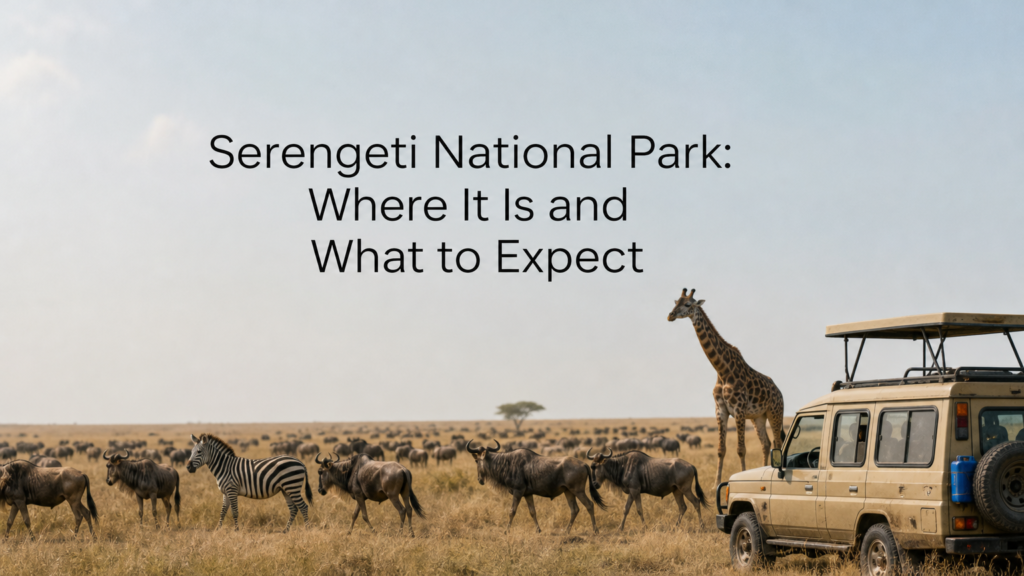
Serengeti National Park is a protected savanna in northern Tanzania, covering about 14,763 square kilometers (5,700 square miles). It is famous for the Great Migration, when more than a million wildebeest and hundreds of thousands of zebras and gazelles follow the rains around the ecosystem. The park borders Kenya’s Maasai Mara reserve to the north and is a UNESCO World Heritage Site.
The name is usually traced to a Maasai word meaning "endless plains," and the first view of the grasslands explains why. This guide covers why the park is worth a trip, where it sits and how you reach it, how to choose an area and season, and what a safari day actually looks like.
Bushline Tanzania Safaris is a Tanzania-based operator that plans private safaris through the Serengeti and the rest of the Northern Circuit. Our founder, William Kipera, is a professional guide with more than nine years of experience in Tanzania’s parks. What follows comes from that field experience.
Why Serengeti National Park is worth visiting
The Serengeti is worth the trip because it pairs the largest overland wildlife movement on earth with dependable big cat sightings, in open country where animals are easy to see.
The Great Migration and year-round game
The migration is not a single event on a single date. The herds travel a rough clockwise circuit through the year, following rain and fresh grass. Where they are in any given month depends on the weather, so timing is never guaranteed.
The park is also rich when the herds are elsewhere. Resident wildlife stays all year: lions, leopards, cheetahs, elephants, giraffes, hippos, crocodiles and more than 500 bird species. Rhinos are present but few, and sightings are rare.
Landscape and protected status
Few parks offer this much variety. You get short-grass plains, acacia woodland, rivers and granite outcrops called kopjes, where lions often rest in the shade. The terrain is open, so you can watch a hunt unfold from a distance instead of catching a glimpse in thick bush.
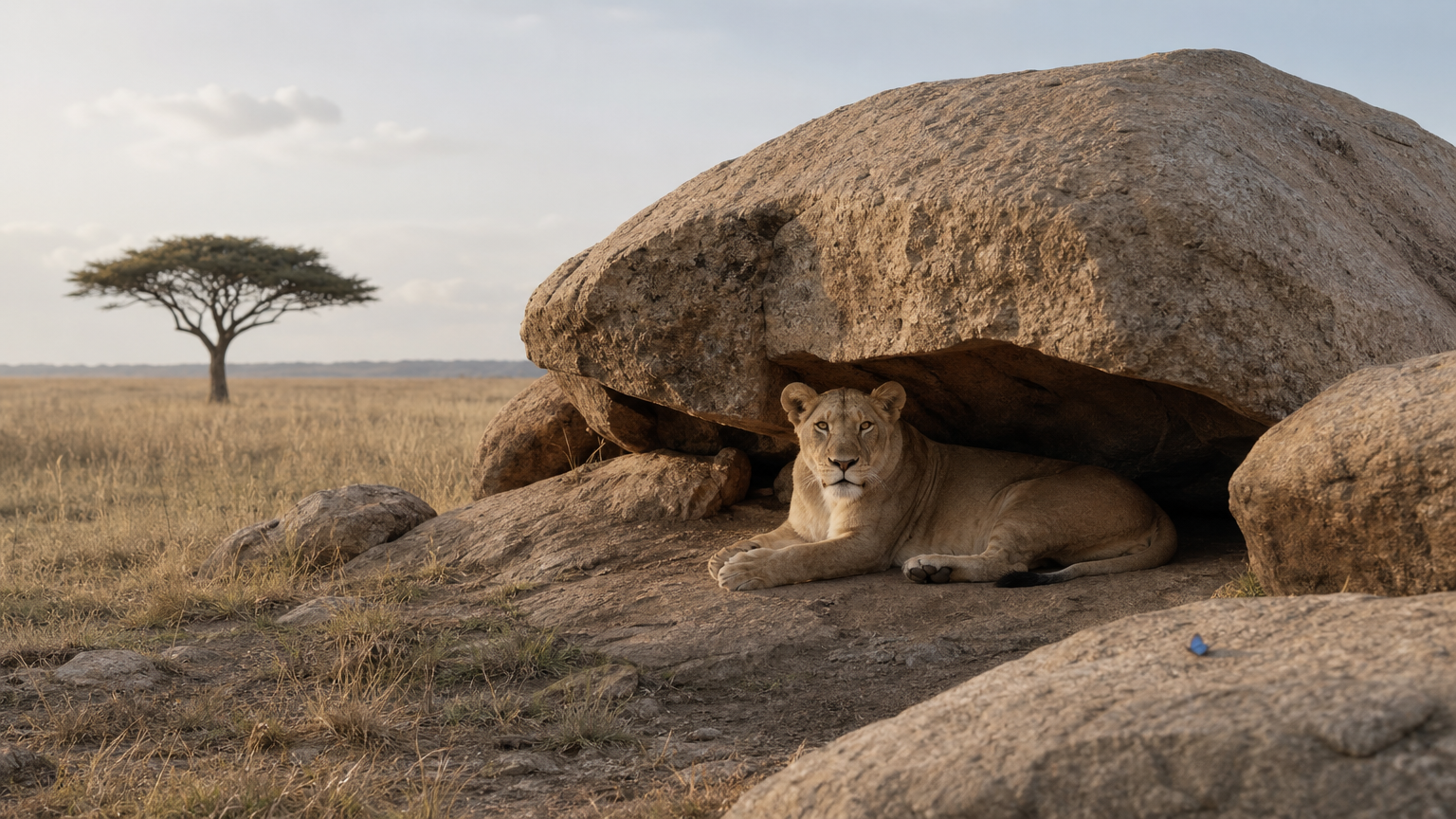
The park was inscribed as a UNESCO World Heritage Site in 1981, and it forms one connected ecosystem with the Maasai Mara in Kenya.
The Serengeti rewards you in every month, because the herds move but the predators and resident game stay.
Where Serengeti National Park is and how to reach it
Serengeti National Park lies in northern Tanzania, mostly in the Mara Region and partly in the Simiyu Region, at roughly 2°24′S, 34°36′E. Most travelers fly into Kilimanjaro International Airport near Arusha and continue by road or small plane.
Location and neighbors
The park is part of Tanzania’s Northern Circuit, alongside Ngorongoro Crater, Lake Manyara and Tarangire. The Ngorongoro Conservation Area adjoins its southeast edge. To the north, the park meets Kenya’s Maasai Mara at the border, and wildlife crosses freely between the two during the migration.
Getting there from Arusha
You have two realistic options.
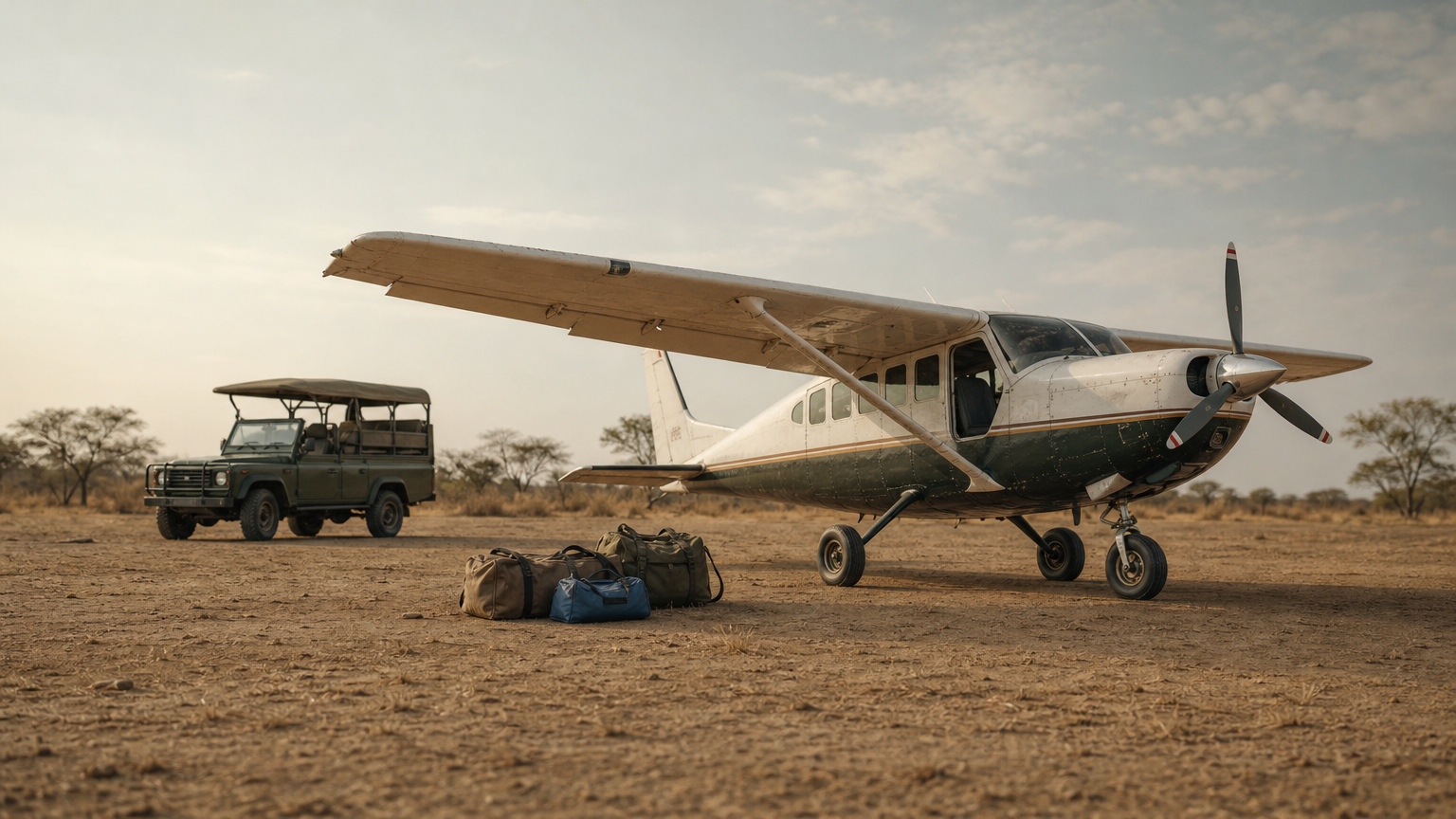
- Drive: The road from Arusha usually passes through Lake Manyara or Tarangire and the Ngorongoro highlands. Plan on most of a day, ideally with a game stop along the way.
- Fly: Scheduled and charter flights land on airstrips inside the park. They save hours of driving, but you pay more and your baggage allowance is tight.
Many travelers drive in and fly out, which keeps the scenery and saves a day at the end. Our 7-day Northern Circuit safari, for example, starts with your arrival at Kilimanjaro International Airport and moves through Tarangire to the Serengeti.
Think of the Serengeti as a day’s travel from Arusha, and build your first and last days around that.
How to plan a Serengeti visit
Plan around three choices: which part of the park you stay in, when you travel, and how many nights you give it. Get these right and the rest is detail.
Choose the area and the season
The park is large, so where you sleep matters more than the month. This table gives typical patterns, though the herds follow rain, not the calendar.
| Area | Best known for | Typical period |
|---|---|---|
| Southern plains and Ndutu | Calving season, predators on open grass | Roughly January to March |
| Central Seronera | Big cats, resident game | Year-round |
| Western corridor | Grumeti River crossings | Roughly May to July |
| Northern Serengeti | Mara River crossings | Roughly July to October |
The dry season, from about June to October, is the easiest for game viewing because animals gather near water. The long rains usually fall from March to May, when lodges can be quieter and the landscape is green.
Set the length and budget
Give the Serengeti at least three nights, and four if you want to move between areas. Fewer nights mean more time in the car than watching animals.
As a worked example, our 8-day Serengeti and Zanzibar safari holiday visits Tarangire, the Serengeti and Ngorongoro Crater, then ends at Stone Town and Kendwa Beach. It starts at about $4,303 per person, so two travelers should budget around $8,606. Always check what a quote includes, since international flights are normally booked separately. Our packages mostly run from about $2,000 to $5,000 per person, depending on accommodation level, from budget to luxury plus.
Choose your area first, then your dates, because a good base in the right region beats a perfect month in the wrong one.
What to expect on safari in the Serengeti
Expect early starts, long game drives in a 4×4 with a pop-up roof, and evenings at a lodge or tented camp. The pace is slow and rewarding.
A typical day
Most days begin around sunrise, when predators are active and the light is soft. After a morning drive you return to camp for lunch and rest during the midday heat. A second drive in the afternoon often brings the best light for photography. Some travelers add a full-day game drive with a packed lunch to cover more ground, which suits the larger areas.
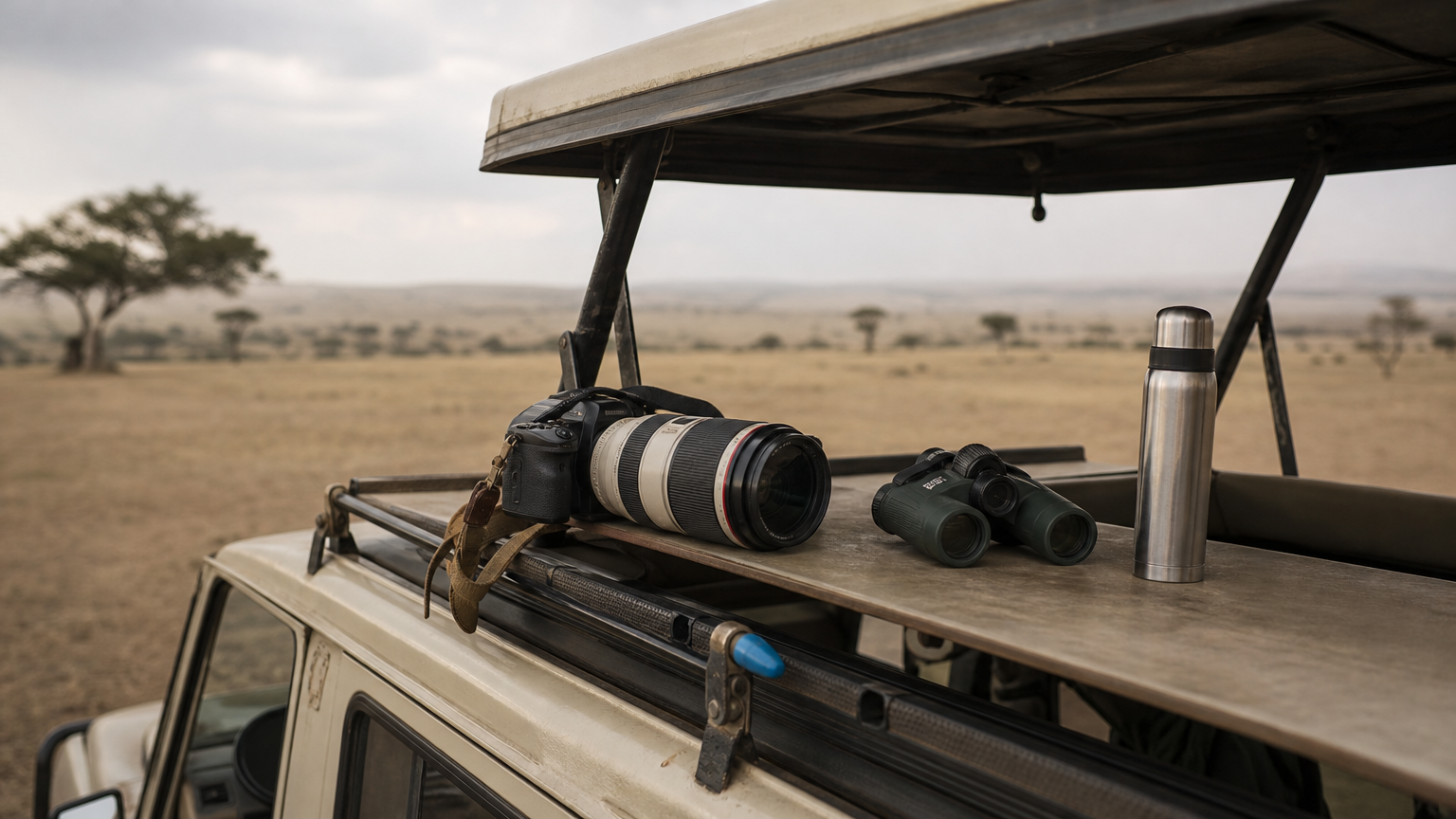
A private safari lets you stay longer at a sighting, skip what bores you and set your own pace. That flexibility is the main reason travelers with children or serious cameras choose it.
Practical tips before you go
- Buy travel insurance before you book. We strongly recommend it for every client.
- Pack neutral clothing in khaki, olive or tan, plus a warm layer, since mornings are cold in an open vehicle.
- Ask your doctor about malaria prevention and vaccines well ahead of your dates.
- Check entry rules for your passport before you travel.
Pack for cold dawns and hot afternoons, and keep your camera within reach all day.
Planning your Serengeti trip
Serengeti National Park is a large, UNESCO-listed ecosystem in northern Tanzania, best known for the Great Migration but rewarding all year. You reach it from Arusha by road or air, and your choice of area and season shapes what you see. Allow at least three nights, and match your budget to the accommodation level you want.
If you would like a trip built around your dates, pace and interests, you can request a tailored Serengeti safari from Bushline Tanzania Safaris.