
Best Time for an African Safari: Months, Regions, Migration
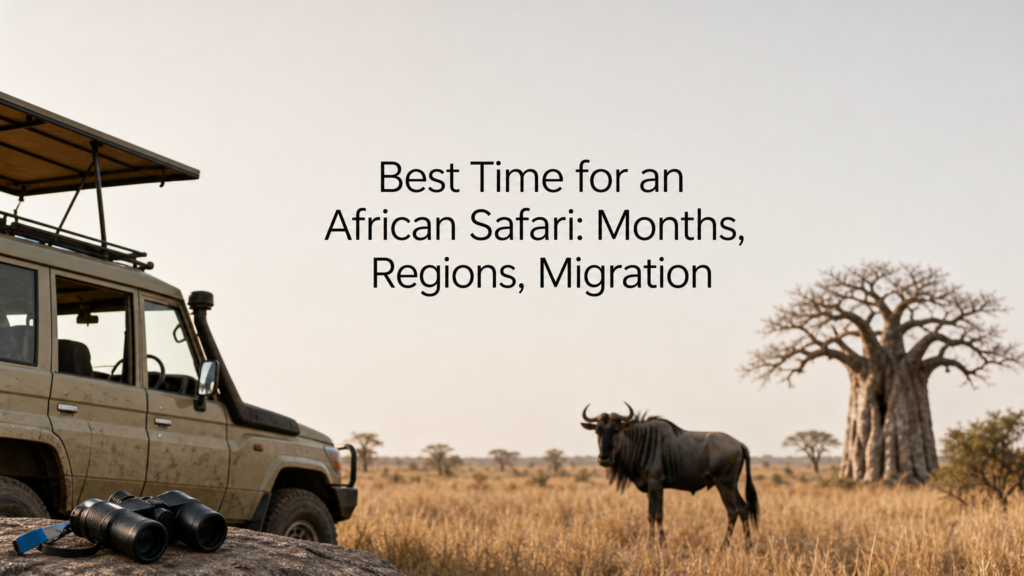
The best time for an African safari is the dry season, which runs from about June to October in East Africa and May to October in Southern Africa. Grass thins, animals gather at the few remaining water sources, skies stay clear, and mosquito numbers drop. "Best" still depends on what you want to see. River crossings, newborn animals, birdlife and lower rates each have their own window.
This guide explains why timing matters, how to pick your month from your own priorities, and what East Africa and Southern Africa offer through the year. It also settles the practical questions: which single month works best, and when the rains are worth the risk.
It comes from a Tanzania perspective. Bushline Tanzania Safaris plans private safaris in the Northern Circuit and the southern parks, and our founder William Kipera has guided for more than nine years. Seasons shape every itinerary we build, so we explain them here the way we would to a guest planning a trip.
Why the timing of an African safari matters
Timing decides how much wildlife you see, what the landscape looks like and what the trip costs. The same park can feel like a different place in August and in April.
Seasons control where animals are
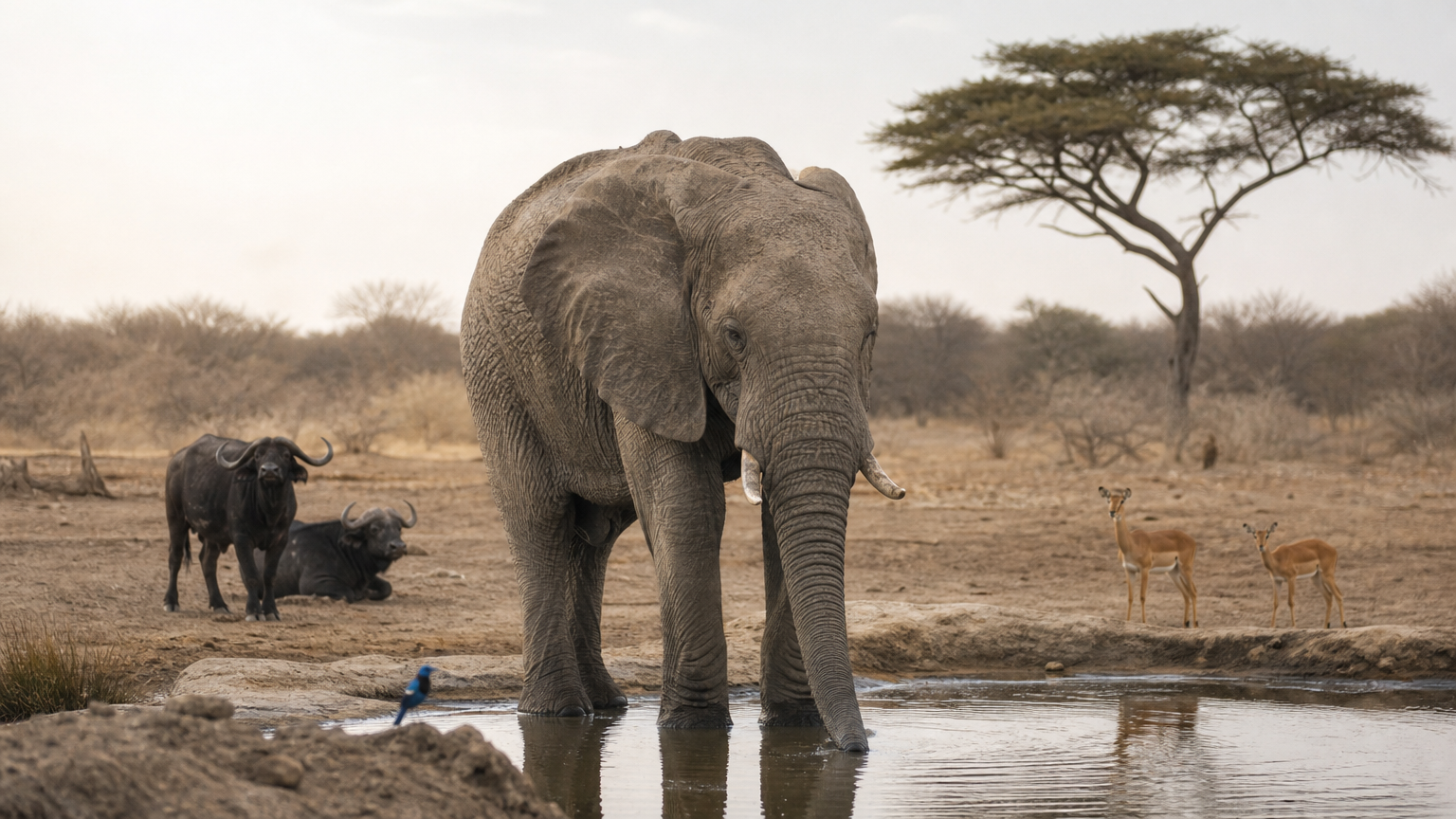
In the dry season, water becomes scarce, so elephants, buffalo, antelope and the predators that follow them concentrate along rivers and waterholes. Vegetation is thin, which means you spot more animals per game drive.
In the wet season, water is everywhere and animals spread out across the plains and woodland. The grass is tall and sightings take more patience. The reward is green scenery, newborn animals and excellent birding.
Dry season versus green season
The trade-offs are simple. This table shows how the two seasons compare in most safari areas.
| Factor | Dry season | Green (wet) season |
|---|---|---|
| Wildlife visibility | Easiest, thin vegetation | Harder, tall grass |
| Scenery | Brown, dusty, clear skies | Lush and green |
| Crowds | Highest, especially July to August | Fewest vehicles |
| Rates | Peak prices | Lower rates |
| Roads and camps | Reliable access | Some roads slow, some camps close |
| Mosquitoes | Fewest | More |
Mosquito numbers are lowest in the dry months, but ask your doctor about malaria prevention whatever month you choose.
Dry season gives you the easiest wildlife viewing, and green season gives you space, scenery and lower prices.
How to choose the best time to go on an African safari
Choose your top wildlife goal first, then match it to a region and its season. Dates come last, because the goal narrows the window for you.
Start with the one thing you most want to see
Work through these steps in order:
- Pick your top priority: river crossings, calving, big cats, elephants, birds, gorillas or a beach extension.
- Find the region where that happens, using the table below.
- Check the weather pattern for that region, not for "Africa" as a whole.
- Pick two or three flexible travel weeks inside that window.
- Ask whether you can tolerate crowds or rain. That decides whether you aim for the peak or the shoulder.
Match your goal to a window
| Your goal | Where | Best months |
|---|---|---|
| Mara River crossings | Northern Serengeti, Masai Mara | Roughly July to October |
| Calving season and predators | Southern Serengeti, Ndutu area | December to March |
| Elephants and big cats at water | Tarangire, Ruaha, Chobe, Kruger | June to October |
| Birdwatching and baby animals | Most of Southern and East Africa | November to April |
| Gorilla trekking | Uganda, Rwanda | June to September, January to February |
| Zanzibar beach extension | Zanzibar | June to October, January to February |
Decide what you want to see before you decide when to go, because the goal sets the window.
Best time for safari in East Africa
East Africa has two dry seasons and two rainy ones. The prime window runs from June to October, with a second good stretch in January and February.
Tanzania and Kenya seasons
The long rains fall from roughly March or April to May, and many camps close or cut back. The short rains come in November and December. They bring brief showers, and the camps stay open, the crowds are gone and game viewing is still good.
Tarangire is at its best from June to October, when elephants crowd the river. Ngorongoro Crater delivers wildlife all year, though the dry months bring the most vehicles. If you want fewer vehicles, consider January and February or the short rains.
The Great Migration by month
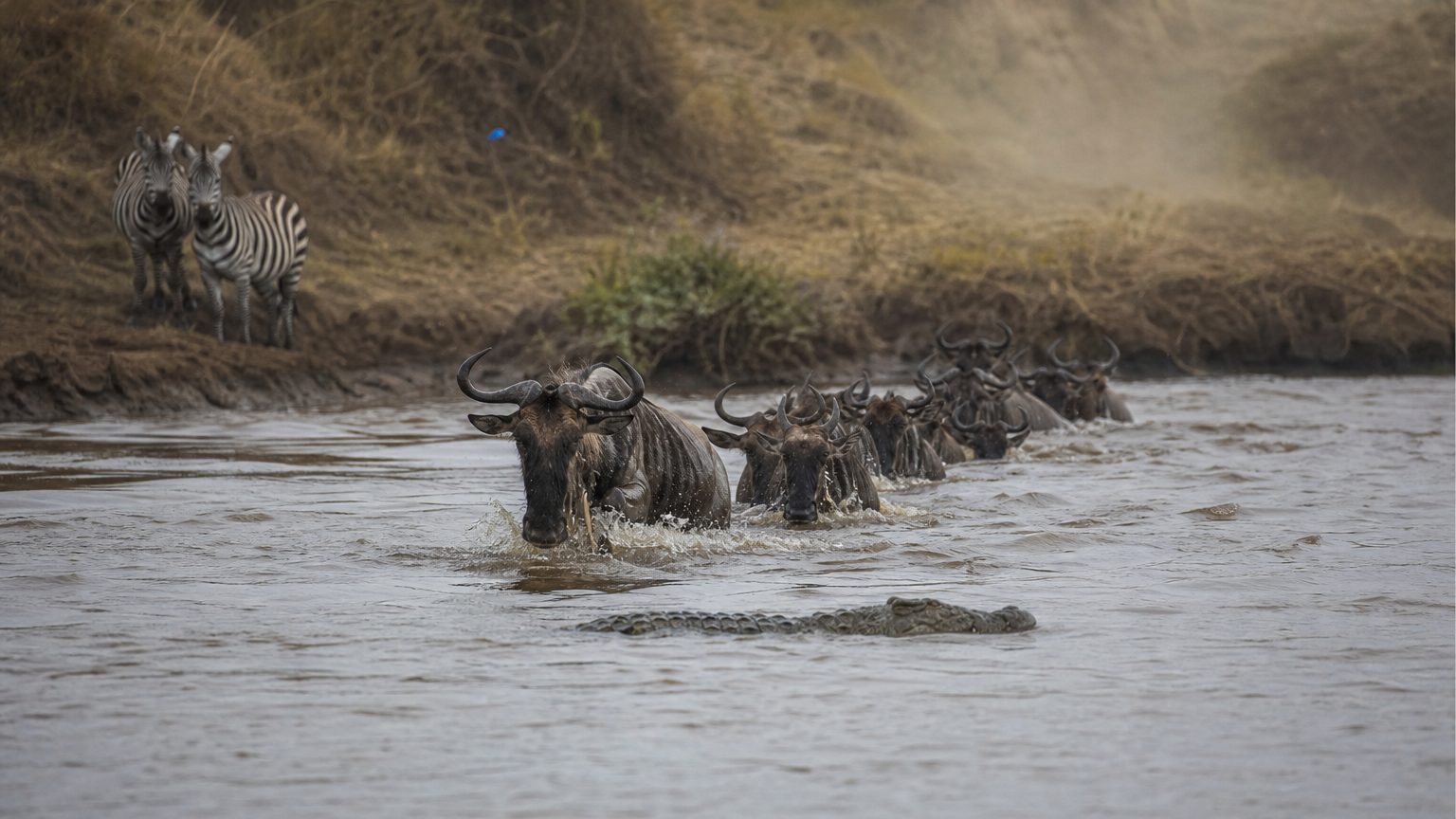
The herds follow the rains in a loop through the Serengeti and the Masai Mara. The Great Migration never stops, so the right month depends on the scene you want.
| Months | Where the herds are | What you see |
|---|---|---|
| December to March | Southern Serengeti, Ndutu area | Calving, with lions and cheetahs hunting |
| April to May | Central and western Serengeti | Long rains, green plains, few visitors |
| June to July | Western corridor, Grumeti River | First river crossings, herds heading north |
| July to October | Northern Serengeti, Masai Mara | Mara River crossings, peak drama |
| November | Herds drift back south | Short rains, quiet parks |
The herds move with the weather, so treat these months as typical rather than guaranteed. A good operator tracks their position and adjusts your camps.
For river crossings, aim for July to October. For calving, aim for January and February.
Best time for safari in Southern Africa
Southern Africa’s safari season is the dry winter, May to October, and the best game viewing comes at the hot, dry end of it, in August to October. This covers South Africa, Botswana, Zambia, Zimbabwe and Namibia.
The dry season is prime
By late in the dry season, trees are bare and waterholes are the only drink for miles. Chobe in Botswana is a good example, with elephants massing along the river. Winter nights can be properly cold on early game drives, so pack layers, though days stay mild. Namibia is the exception, since its wildlife viewing works well all year.
The green season and southern Tanzania
From November to March, Southern Africa turns green and hot, with short, intense downpours. Many animals give birth, birdwatching peaks, and Botswana sees a zebra migration roughly from November to February.
The same logic applies to Tanzania’s southern parks. Ruaha and Nyerere are best from June to October, when animals concentrate at the rivers, and some camps close in the heaviest rains.
In Southern Africa, the late dry season from August to October gives the best game viewing.
Best month, worst month and the low-season trade-off
If you want one month, choose September. The dry season is well established, the Mara River crossings are often still running, and Southern Africa’s wildlife is at its most concentrated. It is also less crowded than July and August.
When to avoid, and when low season works
The weakest period for most first-time visitors is April to May in East Africa, when the long rains peak. You can still have a good trip then, but expect afternoon downpours, slow roads and closed camps.
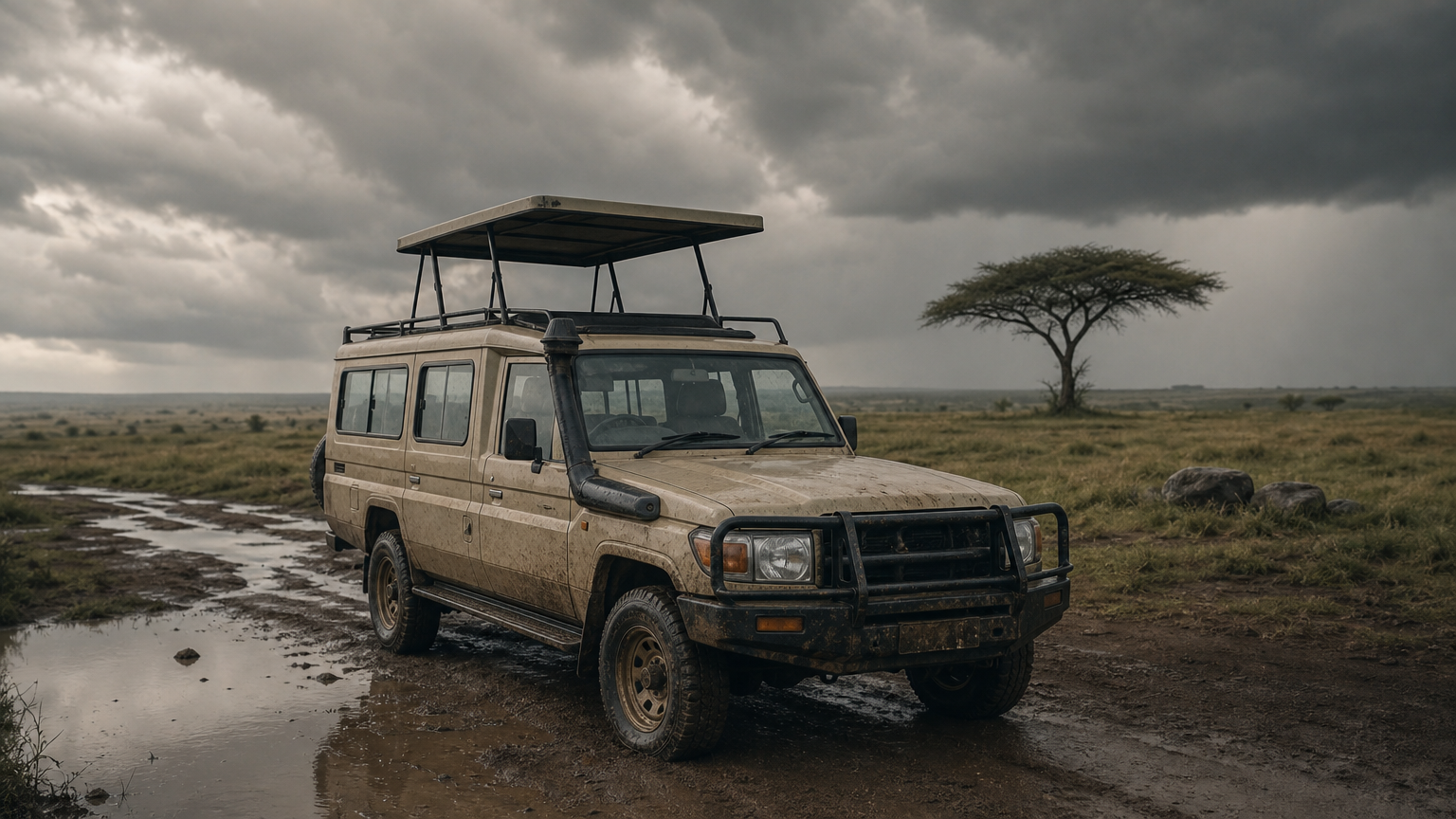
Low season suits travelers who want space and value over maximum sightings. Look at the short rains in November and December, or January to March in Southern Africa, if you prefer green scenery, birdlife and fewer vehicles.
Booking around peak demand
July and August overlap with US summer vacations, so the best lodges fill early. For those months, start planning at least six to nine months ahead. Because Bushline builds private itineraries around your dates and pace, a flexible window gives us more room to place you in the right camps.
Book early for July to September, and stay flexible if you want to travel in the shoulder months.
Pick your goal, then pick your month
The best time for an African safari is the dry season, June to October in East Africa and May to October in Southern Africa, with September as the safest single month. If your priority is river crossings, go from July to October. For calving, go in January or February. If you want green scenery, birds and quiet parks, the rainy months reward you.
Start with what you want to see, choose the region that delivers it, and then fix your dates. If you want help turning that into an itinerary, you can plan a private Tanzania safari with Bushline and tell us your dates, budget and priorities.